Protein is in everything right now — the bread, the water, the ice cream. Here is the honest version, including which of our own smoothies have almost none.
the four-line version
1. Most people already get enough. 2. You do not need to pair rice with beans — that was retracted in 1981. 3. The grams come from nut butter, seeds, oats and beans — a serving of greens or fruit is too small to add much. 4. If you want more in your cup, ask for hemp.
It is the question we get asked more than any other at the register, and it has quietly become the question of the decade: is there protein in this?
Protein is having a moment. It is being added to breakfast cereal, bottled water, cookies and coffee creamer, and the word is printed in larger type than the ingredients underneath it. Some of that is useful. A lot of it is marketing.
So rather than add to the noise: here is how much you actually need, where it genuinely lives in plant food, and which drinks on our own menu are not protein drinks at all.
01 FIRST - How much do you actually need?
The official US recommendation is 0.8 grams per kilogram of body weight. For someone around 150 pounds, that is roughly 55 grams a day.
That number is the floor, not the target.
It was set to prevent deficiency in a healthy sedentary adult — not to keep muscle as you age or recover from training.
For active people, the joint position of the American College of Sports Medicine and the Academy of Nutrition and Dietetics is 1.2 to 2.0 grams per kilogram — so 80 to 135 grams for that same 150-pound person. Older adults sit higher than the RDA too, because the body gets less efficient at using protein to maintain muscle with age.
Who actually needs to pay attention
- Anyone training hard
- Anyone over about sixty
- Anyone eating in a deficit to lose weight
- Anyone eating fully plant-based.
If you are not in one of those four groups, the protein cookie is probably solving a problem you do not have.
02. The myth that will not die
You have probably heard that plant proteins are “incomplete,” and that you have to pair rice with beans at the same meal to make a whole protein. That came from a hugely influential 1971 book, Diet for a Small Planet.
It's own author retracted it ten years later.
In the 1981 revised edition, Frances Moore Lappé wrote that protein combining was unnecessary for anyone eating a varied plant diet with enough calories. The correction never travelled as far as the claim.
What is actually true is less dramatic. Virtually every plant food contains all nine essential amino acids — just in different proportions. Grains run a little short on lysine; legumes run short on methionine. Your body keeps a circulating pool and draws on it across the day, so it does not need the perfect ratio at 12:40pm. It needs variety and enough total protein.
There is one genuine wrinkle. Plant protein is somewhat less digestible than animal protein, and plant sources tend to be lower in leucine, the amino acid most involved in signalling muscle repair. That is a real difference, not a myth — and the practical answer is not anxious meal-pairing. It is simply aiming a bit higher on total grams.
03 Where plant protein actually is
This is the useful part, because the answer is not where most people assume. Here is what is in the things we keep behind our counter, per the amount we actually use:
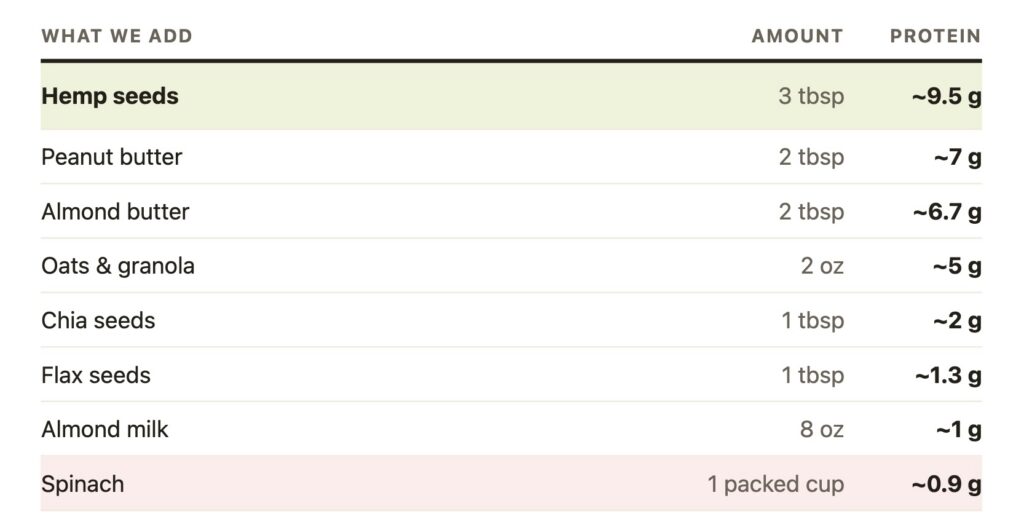
Two things jump out. The first is that hemp seeds are the quiet winner — all nine essential amino acids in useful amounts, about a third protein by weight, and they taste like almost nothing, so they go into anything without changing it.
The second is the bottom of the table, and it needs saying carefully. Spinach is not low in protein by weight — close to half its calories are protein, a higher share than most beans. But a packed cup is only around 30 grams, so you get well under a gram. The issue is serving size, not the plant. Our own Popeye is the perfect illustration.
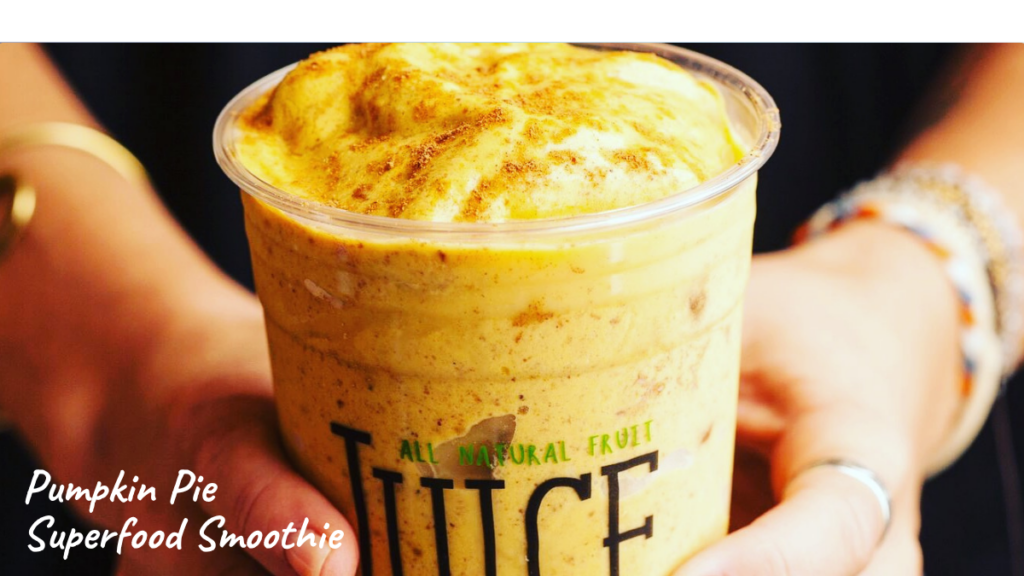
It's not a compromise between warm and cold. It's the cooked-nutrient advantage in a cold cup. Same logic in the Pumpkin Spice Bites — real pumpkin plus almond butter, pecans, chia, and flax carrying it, with dates and oats instead of refined sugar.
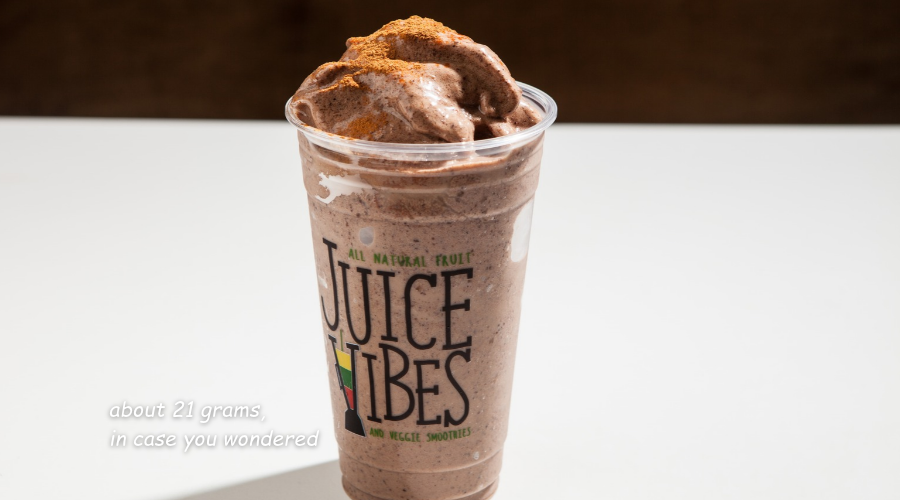
Popeye has 16 grams of protein. The spinach accounts for half of one.
The peanut butter and the hemp on top are doing essentially all of the work. A drink can be genuinely protein-rich and the ingredient you assumed was responsible can be contributing almost none of it.
Worth adding that Popeye was never really about iron either: in the original comics he ate spinach for vitamin A. You may have heard that spinach’s iron reputation came from a misplaced decimal point — that story is itself unsubstantiated. Spinach does contain iron; it is simply poorly absorbed, because the oxalates in it bind to the mineral.
04 So which of ours are actually protein drinks?
Honest answer: some of them, and not the ones with the healthiest-sounding names. Protein in a smoothie comes almost entirely from nut butter, seeds and oats. Fruit, juice and greens contribute very little at the volumes that fit in a cup, no matter how healthy they are.
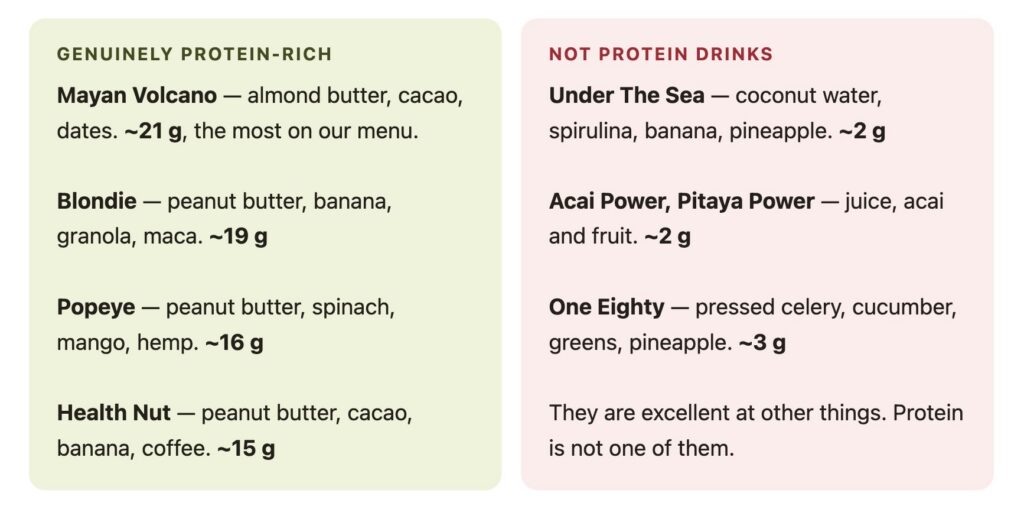
None of that makes them worse. A green smoothie is doing a different job — fibre, potassium, vitamin C, actual produce in a form you will finish. It is just not the thing to drink after lifting and then wonder why you are hungry an hour later.
And here is the neatest proof of the whole argument. Riptide and All Hail To Kale both come topped with hemp seeds — which means that one tablespoon of topping contributes more protein than every piece of fruit in the cup combined. A scoop of pineapple gets you under half a gram. The garnish gets you three.
05 The food side holds its own
Here is what surprises people who only ever order a drink from us. The food menu sits right alongside the best smoothies — and it gets almost none of the attention.
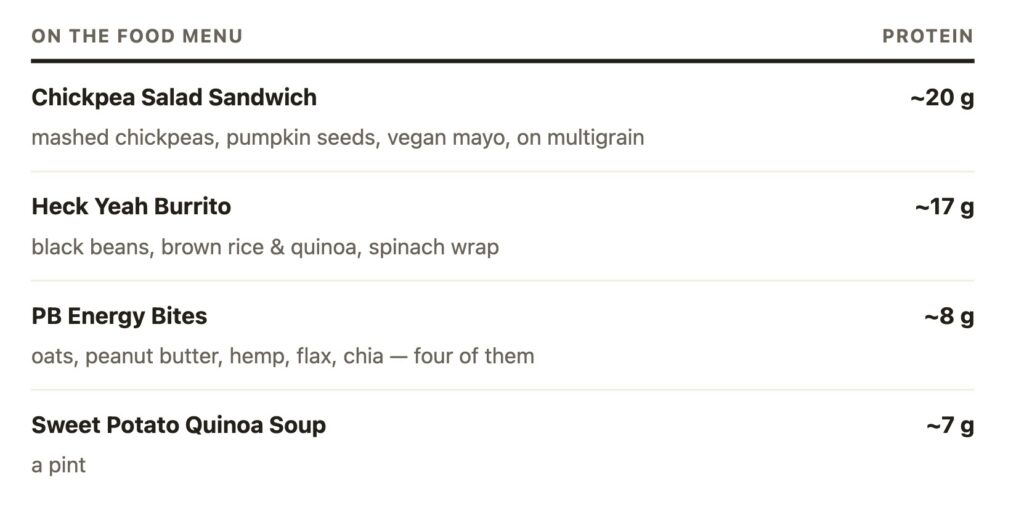
Beans, chickpeas, quinoa, seeds and nuts are where plant protein genuinely concentrates, and they do it without any nut butter involved. Which means the real move is combining the two.
A burrito and a Mayan Volcano is close to forty grams in one visit.
More than most people manage from a whole day of snack-bar protein.
06 The easiest fix in the shop
If you want more protein in whatever you already order, the answer is ask us to add hemp. Three tablespoons is close to ten grams, it disappears into any smoothie, and it works just as well in an acai bowl or on a salad.
Nut butter is the other lever, and it scales hard — two scoops turns a two-gram fruit smoothie into a nine-gram one, and the four scoops in a Mayan Volcano are what put that cup over twenty.
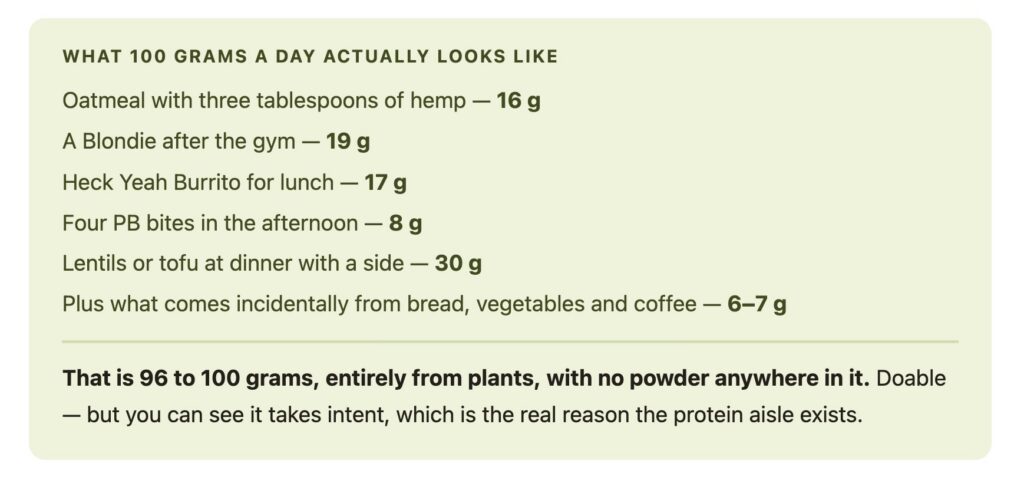
Every Thursday is Top It Thursday for exactly this reason. Tell us what you are trying to do and we will tell you what to put in the cup, rather than selling you the most expensive powder on the shelf.
the takeaway
Work out your own number first — roughly 0.8 grams per kilogram if you are sedentary, up toward 1.2 to 2.0 if you train or you are over sixty. Get it from a variety of whole plants across the day rather than worrying about which ones you eat together. Lean on nut butters, seeds, oats, beans and hemp, and treat the fortified-cookie aisle as optional.
And if you want to know what is in a specific cup of ours, just ask. We will tell you, even when the answer is “almost none.”
Protein figures are approximate and based on standard values for the quantities we use. This is general food information, not medical or dietary advice — if you have a health condition or a specific target to hit, talk to your doctor or a dietitian.